
Some Notes on Proprioception
Restoring or Enhancing our Capacity to Feel This Advent

“If you are not firm in faith, you will not be firm at all.”
Isaiah 7:9
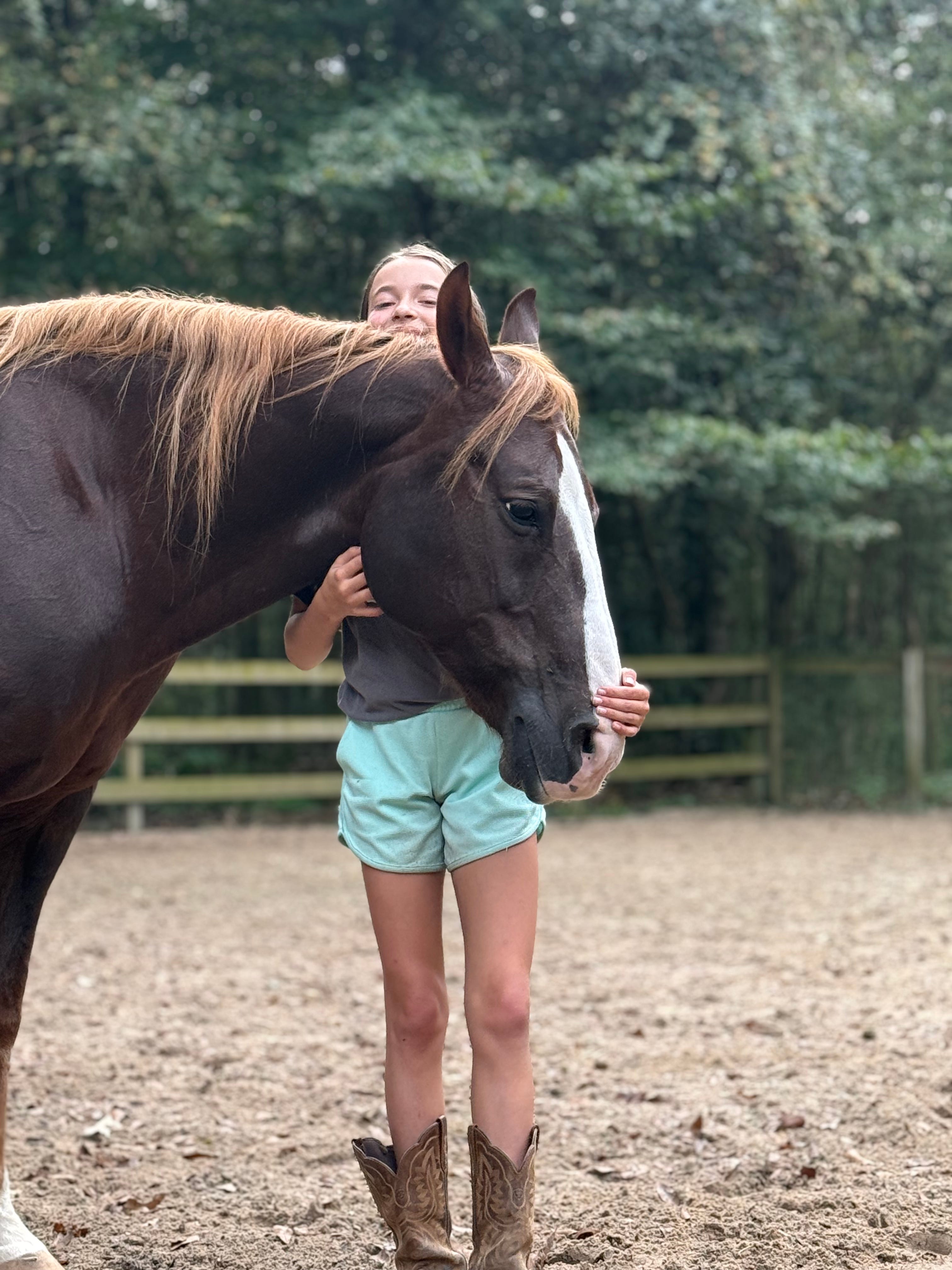
A few posts back I mentioned that Ruth’s horse, Levi was having some issues. After multiple visits with the vet, we decided that he might have Equine Protozoal Myeliencephalitis, or, more simply, EPM. I say “might” because a definitive EPM diagnosis on a living horse requires a spinal tap, and I don’t care enough about definitive diagnosis to put him through that. So instead, we did what many with a might-be EPM diagnosis do, we treated him as if he had it, and let the results of that treatment speak to the presence, or absence, of disease. If the treatment worked, then he probably had it. If it did nothing, then maybe not.
EPM occurs after a horse consumes particles of feces left on pasture, hay, or in water buckets by an opossum who previously ingested muscle tissue from the carcass of an animal infected with a particular protozoa. Gross on so many levels. And because opossums abound down here in the Southeast, and because something like one gram of opossum feces can have up to a billion infected spores and it only takes one spore to cause infection, its estimated that about 90 percent of the horses in states like Louisiana will be exposed to EPM at some point in their lifetime. Though only about 1% of those exposed horses are unable to expel it from their systems before the protozoa crosses the blood-brain-barrier and begins to damage the nervous system. It’s when that happens that symptoms of neurological disease develop and can include anything from mild lameness and dragging of feet, to tripping, falling, and, if left untreated, death. If you’ve ever had a nerve block or felt the sensation of a limb “falling asleep,” that is essentially what happens to a horse with this disease.
EPM used to be considered a death sentence. And the general consensus, or at least what I once believed to be the general consensus, was that even if you managed to stop the progression of the disease through one of the few financially crippling treatment options, whatever damage that had been caused up to that point could not be reversed. But that is only partially true. Yes, treatment can only kill the protozoa and halt future destruction of the neurological system, but there are rehabilitation processes that can reverse a tremendous amount, if not all, of the damage that’s been done. And the way you do that is through various activities and exercises that restore the horse’s capacity to feel.
In the past, horses with EPM were put in stalls and taken out of work due to fear that their lack of coordination would make them a risk to themselves and others. Under these conditions, lack of use of both the body and the neural pathways necessary to restore sensation, led to increased loss of mobility and balance rather than their restoration. Now the new recommendation is that these horses be gradually introduced to increasingly challenging forms of exercise on rough and un-level terrain because this action improves proprioception, which is the body’s ability to understand its position, movement, and force so that it can travel with coordination and balance.
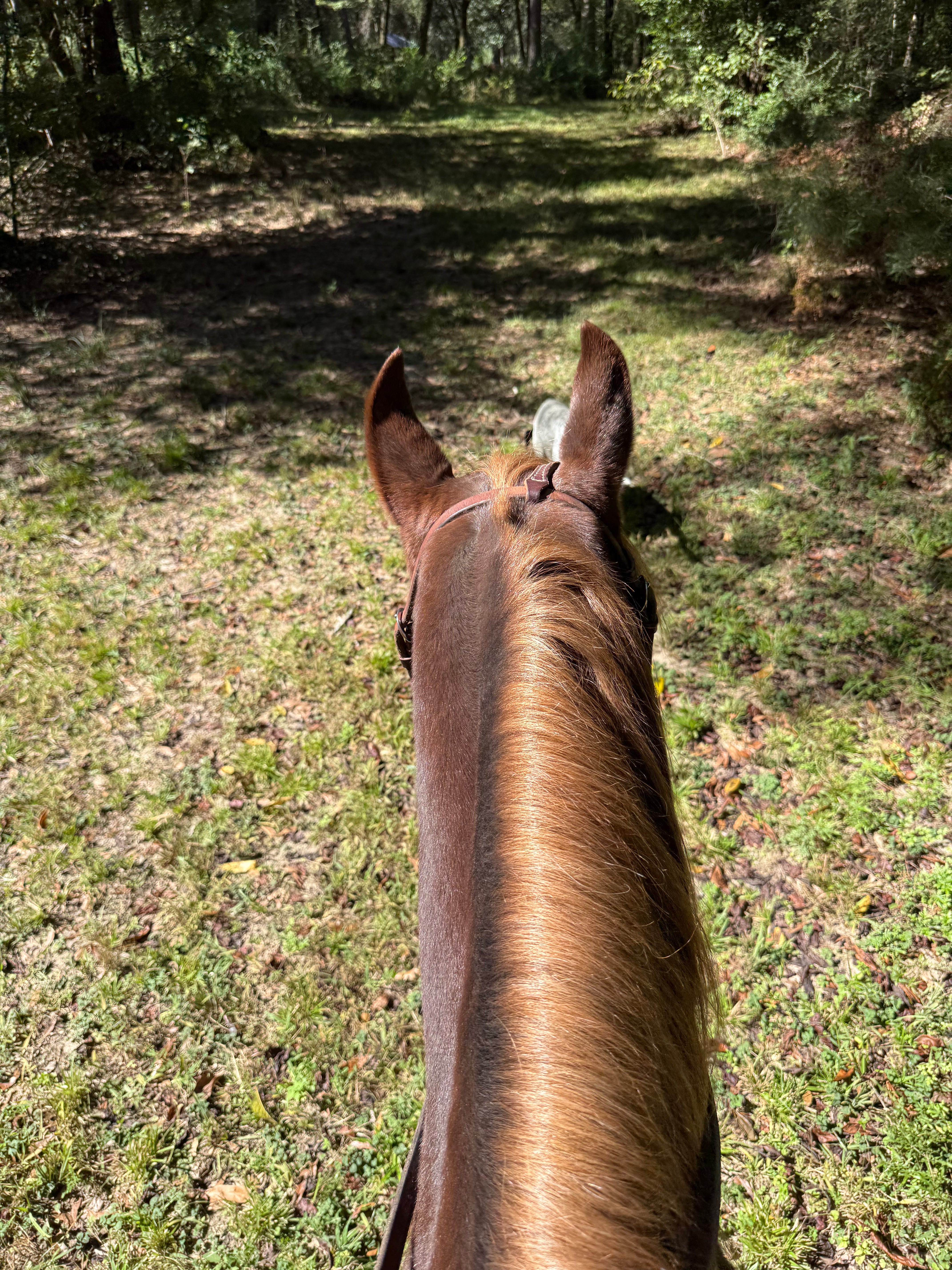
So, Levi and I spent the last few months out on the trails together. We walked up hills and down hills, we walked over logs, rocks, and basically everything that I could find – piles of leaves, gravel, stumps, branches. If it was out there, we stepped over or into it. And as we did, I realized that I had been way too precious about where I let my horses step in the past. I was always so worried about cracked or bruised hooves, or torn or strained muscles or ligaments, which kept me from realizing the deep benefits available to horses who travel over rough and challenging ground. Not just when recovering from a might-be neurological disease, but also in the ongoing pursuit of enhanced feel, balance, and coordination in general.
And as I considered how all of that applied to my horses, I also wondered about the ways it might be equally true of myself.
How often did my own fear of tripping, straining, cracking, tearing, bruising, or stumbling cause me to choose paths or places with predictable footing and level ground? Those ways that are easy to travel and that present limited resistance and less risk?
In what ways do I refuse to take the paths that might include challenging obstacles and instead shelter myself in the comfort of undemanding routes upon cushioned surfaces?
And how has my capacity to feel been numbed or stunted on account of those choices?
Around that same time, I spoke to a woman who had a dressage horse who she did not keep at home because she didn’t have an arena with prepared footing. She said that her horse didn’t have the confidence to be pushed on certain maneuvers without the right ground beneath him. And this had nothing to do with the lady, her horse, or her choices on where the best place was for her to stable him, but as I left that discussion, I couldn’t help but wonder,
What good is the ability to perform a fancy or difficult maneuver, if you can only execute it, or find the courage to attempt it, in ideal conditions?
And to take it further, or maybe to put it differently,
In what ways does my present level of coordination, balance, and my ability to move thoughtfully and position myself appropriately in the world depend on to the provision of level footing that is free from resistance, challenge, and the potential for injury or strain?
Sometime after this, I learned that proprioception pads had been created for dressage horses so that they could try to simulate the physical experience of traveling on uneven terrain, and enjoy its benefits, without actually leaving the comfort of the arena. Kind of strange. And surely not as beneficial as the real thing. But at least it shows that they understand that something is missing for those horses who never have struggle over poor footing.
And maybe in this world where modern life tends to eliminate obstacles and present us with the option, or at least the illusion of prepared and level footing, maybe some of you, like me, feel the urge to fill the gap left before us in some way.
As I write this it is the first week of Advent, a season of preparation where Christians are invited to ready themselves for the reception of Jesus. And as I reflect on what this invitation might involve for me this year, I keep thinking about the difference between the woods and the arena. And the way that travel over rough and uncertain terrain reduces numbness and enhances our capacity to feel as we move through the world around us with confidence, rhythm, impulsion, balance, and ease.
One thing that I am struck by is how Christmas preparation in the West often feels a bit like an extended arena performance on prepared footing. Everything is perpetually lit and in perfect position in what presents itself as a season long denial of the darkness that persists just beyond the doors of our homes, the boundaries of our communities, the walls of a church. In a world where sickness prevails, things don’t always add up as it seems they should, and good does not always, today, overcome evil. And yet, the ground before us presents the illusion of be leveled in a way that enables us to celebrate the birth of our savior uninhibited by obstacles, resistance, and risk as we steep ourselves in the presence of people with shared values and similar beliefs.
But if Christmas, the moment when God performed the greatest maneuver of all time on behalf of this whole weary and war-torn world, and the rejoicing in that, is the end goal of this season, then maybe the invitation of Advent, is to engage in the kind of preparation that reduces numbness and enhances our capacity to feel what has happened, what is happening, and what is still yet to come on account of the birth of Jesus. And maybe that means stepping outside of the areas where things are predictable, level, and entirely too comfortable and performative, so that we might spend the season stumbling our way through some version of rough and ragged terrain in search of Him.
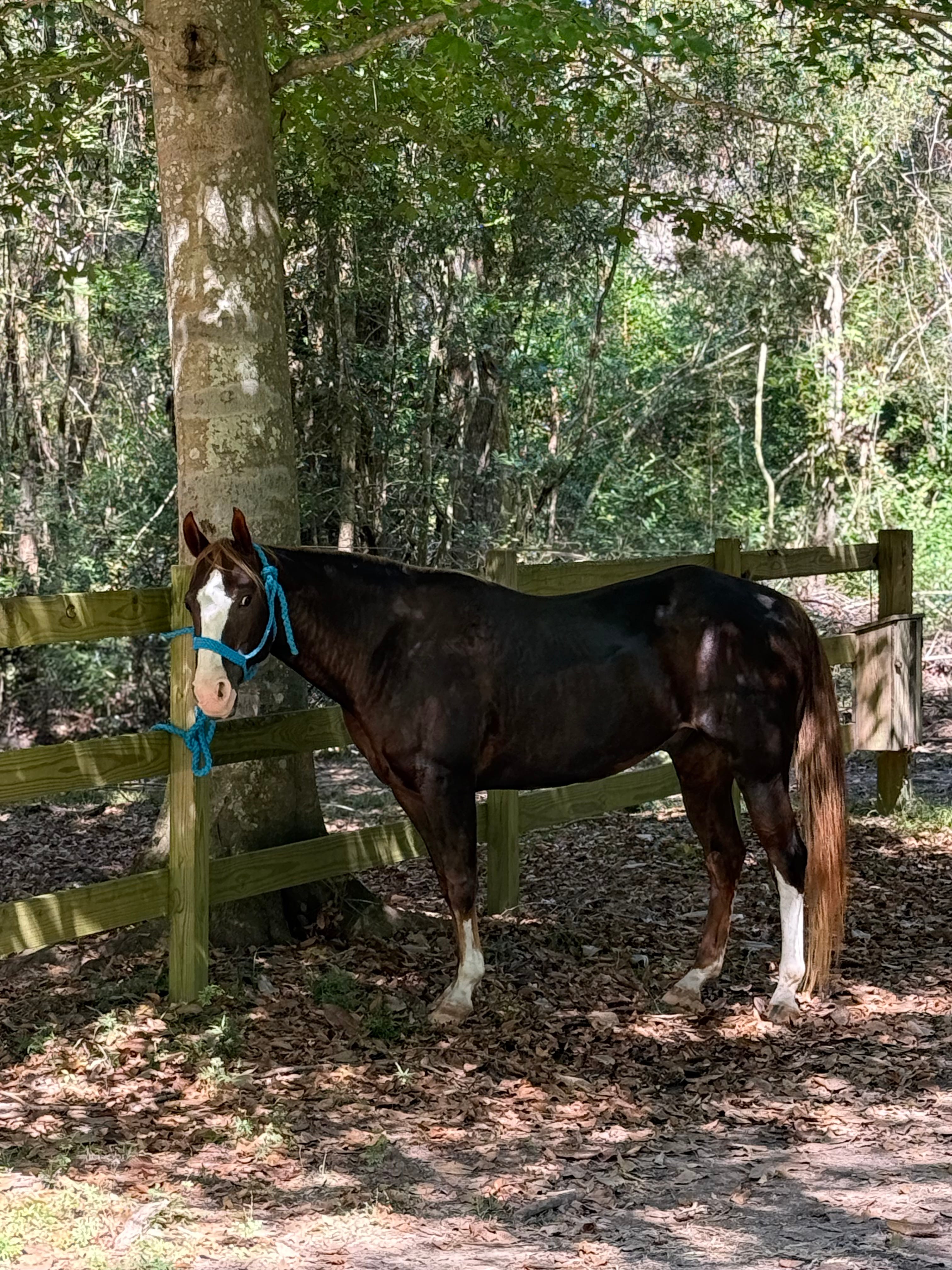
And just to circle back, because I know I left you all hanging, Levi is doing great. He’s not all sorted out, but something that we are doing is working.
Thanks for being here, and for coming along with me in this discussion.
Have a curious first week of Advent, friends.
Good words, friend, and timely for me! I always learn so much from you :).